
Environment
Bello Alimentos invests R$20 million in environmental modernization and expands sustainable capacity in Mato Grosso do Sul
5/06/2026


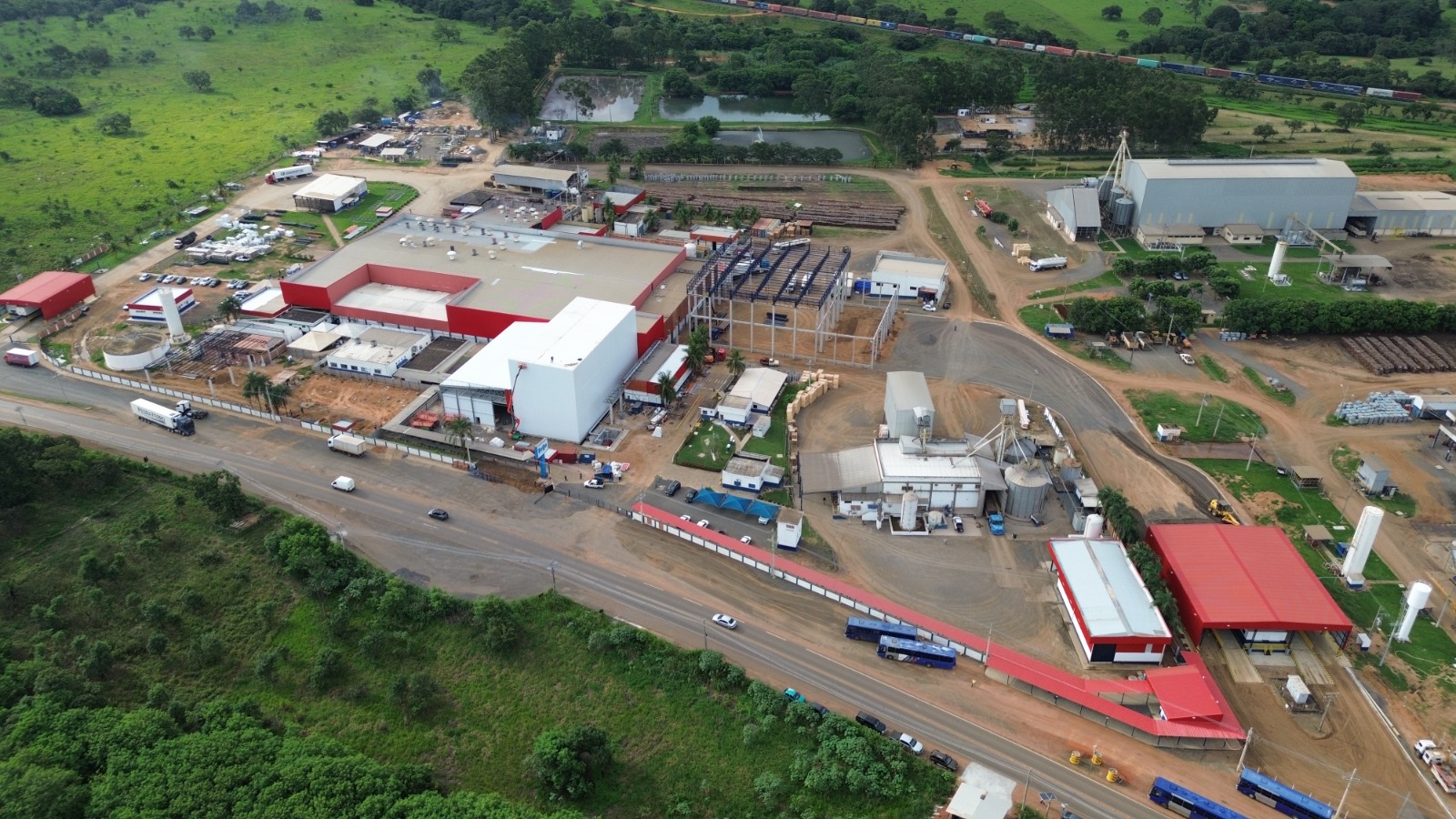
Project includes a new wastewater treatment system, activated sludge technology, and an outfall to the Paraná River, strengthening the environmental performance of the Aparecida do Taboado facility
Bello Alimentos has announced an investment of approximately R$20 million in the environmental modernization of its industrial facility in Aparecida do Taboado, Mato Grosso do Sul. The project includes the expansion of the wastewater treatment system, the implementation of activated sludge technology, and the installation of a new outfall for the discharge of treated effluent into the Paraná River.
The initiative is part of the company’s strategic growth plan and aims to expand the plant’s operational capacity while strengthening environmental sustainability and operational safety standards.
The project began to be structured approximately one year ago and is expected to be completed by July 2027. According to the company, the modernization will position the facility among the most advanced in Brazil’s meat processing industry in terms of environmental management.
According to Fabrício Ferreira, Plant Manager, the project represents a milestone for the company’s operations in Mato Grosso do Sul. “We are investing in state-of-the-art technologies to ensure greater efficiency in wastewater treatment and support the sustainable growth of our operations. Our goal is to go beyond regulatory compliance and become a benchmark in environmental responsibility and natural resource preservation,” he said.
State-of-the-art technology for wastewater treatment
Currently, the facility’s wastewater treatment process relies on screening, physicochemical treatment, and biological lagoons. With the modernization, the entire structure will be redesigned to support production growth while enhancing environmental performance.
The main innovation will be the adoption of an activated sludge system, widely recognized as one of the most effective technologies for the biological treatment of industrial wastewater. The process uses microorganisms and controlled aeration to accelerate the breakdown of organic matter, resulting in greater operational efficiency and higher-quality treated water.
According to Samuel de Oliveira Nogueira, Project Coordinator at the facility, the technology will deliver significant environmental and operational gains. “The system provides superior environmental performance, reduces odors, increases operational reliability, and produces treated water of a higher quality,” he explained.
The new treatment station will have the capacity to process up to 6,000 cubic meters of wastewater per day, supporting the company’s planned production expansion. The system was designed to handle flows of up to 250 cubic meters per hour, significantly above current processing levels.
In addition, the treatment lagoons will be equipped with aeration systems that enhance the biological activity responsible for removing residual organic loads.
Strict monitoring of treated effluent discharge into the Paraná River
Another key component of the project is the implementation of a new treated-effluent discharge system into the Paraná River. Before reaching the receiving water body, the effluent will undergo all stages of treatment—primary, secondary, and tertiary—through physical, chemical, and biological processes.
The outfall will feature a dedicated pipeline extending more than 200 meters into the river, allowing for greater dilution and minimizing environmental impacts.
The company reports that monitoring will be continuous, with regular analyses of indicators such as chemical oxygen demand (COD), nitrogen, and phosphorus, in accordance with environmental regulatory requirements.
The operation will be overseen by the Mato Grosso do Sul Institute for the Environment (Imasul) and the National Water and Basic Sanitation Agency (ANA).
Economic impact and long-term vision
In addition to the environmental benefits, the investment is expected to generate positive economic impacts across the region. The expansion of the wastewater treatment infrastructure is creating opportunities for suppliers, specialized service providers, and local employment in eastern Mato Grosso do Sul.
The company also emphasizes that the project was designed with a long-term vision. The new infrastructure will enable the future reuse of treated water within the plant’s operations, further enhancing water efficiency and sustainability.
For Bello Alimentos, sustainability and competitiveness go hand in hand. “Investing in sustainability means investing in innovation, efficiency, and business continuity. We aim to grow responsibly while contributing to environmental preservation and the development of the communities where we operate,” said Fabrício Ferreira.
With this initiative, Bello Alimentos reinforces its strategy of investing in environmental technologies and strengthens the position of its Aparecida do Taboado facility as one of the leading examples of sustainable innovation in Brazil’s agribusiness sector.
READ TOO

Animal welfare
16/04/2025
Aurora Coop renews international certifications and reinforces commitment to animal welfare
Independent audits confirm excellence in swine and poultry operations, impacting over 350 million animals annually Aurora Coop, one of Brazil’s largest agro-industrial […]
Read more
Environment
03/06/2024
BRF links sustainability to us$150 million loan with First Abu Dhabi Bank
The loan, signed in March this year, will help the Company advance in reducing greenhouse gas emissions and increasing the consumption of […]
Read more
Environment
19/10/2023
Pamplona produces compost with organic waste
Pamplona Alimentos, a company specializing in the pork segment, in partnership with the Agricultural Research and Rural Extension Company of Santa Catarina […]
Read more