
Sectoral Data
Aurora Coop releases first Sustainability Report highlighting animal welfare as a strategic pillar
12/02/2026


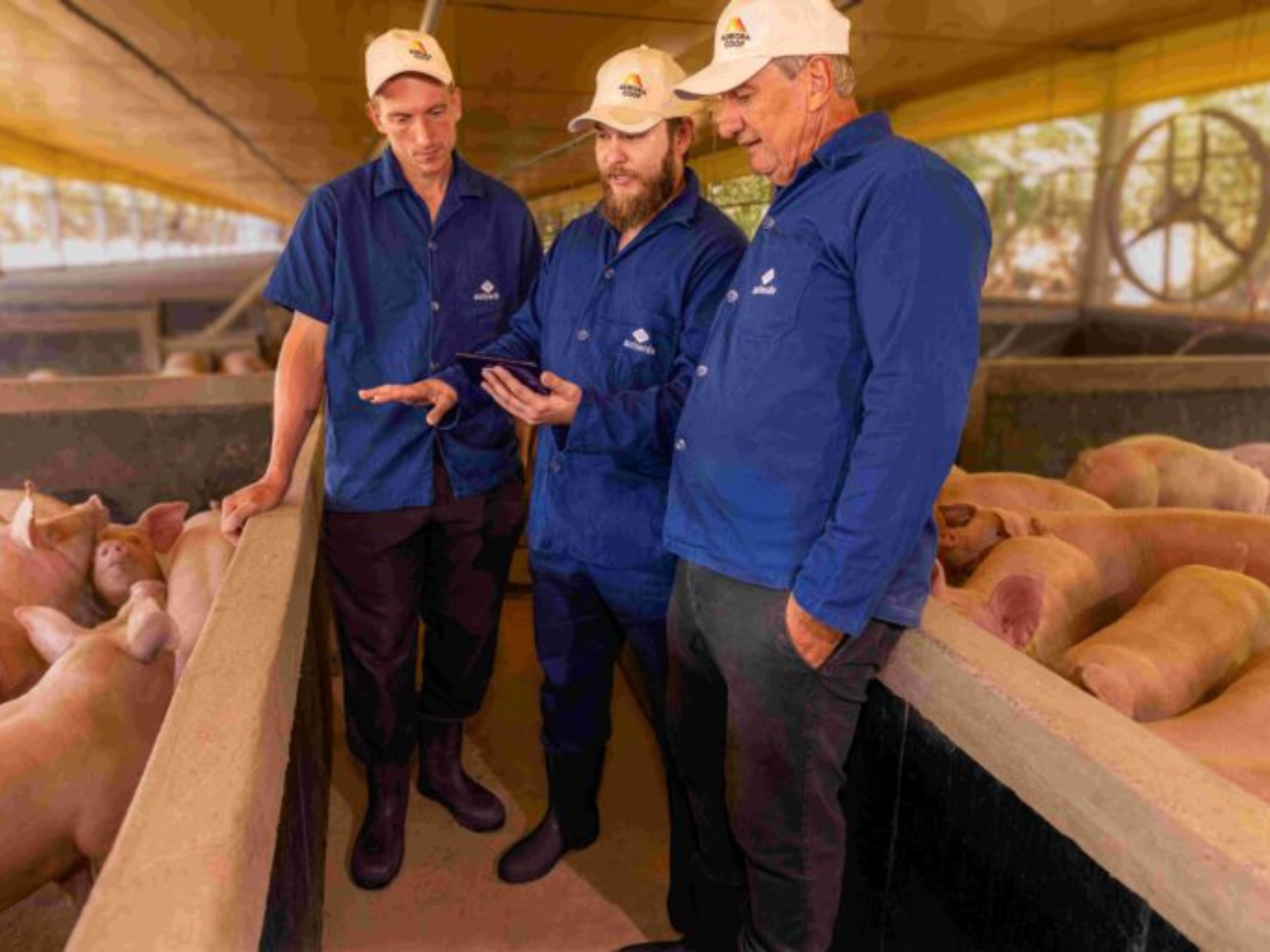
Aurora Coop published its first Sustainability Report in September 2025, outlining the cooperative’s main environmental, social, and governance (ESG) initiatives. Prepared in accordance with the Global Reporting Initiative (GRI) standards, the report emphasizes transparency across the production chain and identifies animal welfare as a central pillar of the company’s strategy.
According to the cooperative, a comprehensive Animal Welfare Program has been structured and implemented based on the principles of the international Welfare Quality® protocol, which guides humane handling practices throughout the entire production cycle, from birth to slaughter.
Aurora Coop’s Vice President of Agribusiness, Marcos Antônio Zordan, stated that the program aims to ensure high standards of animal care while promoting continuous improvements across the production chain.
Among the initiatives highlighted in the report is the adoption of a zero-tolerance policy for animal mistreatment, as well as ongoing training programs for technicians, employees, and integrated producers, focusing on ethical and responsible animal handling practices.
The cooperative also reports investments in farm infrastructure and animal housing conditions designed to ensure thermal comfort, freedom of movement, access to water, and balanced nutrition. These efforts are complemented by regular internal and external audits to verify compliance and support continuous improvement.
According to the report, the company’s animal welfare policies are also aligned with the United Nations Sustainable Development Goals (SDGs).
Production impacts
Aurora Coop notes that adopting animal welfare practices brings measurable benefits that extend beyond ethical considerations. Reported outcomes include lower mortality rates, improved feed conversion, greater uniformity among production batches, reduced losses associated with injuries or stress, and increased productivity with lower environmental impact.
These results highlight animal welfare as a strategic factor influencing production efficiency, product quality, and the long-term sustainability of operations.
Investments in infrastructure, balanced nutrition, technical training, and improved management systems are part of an integrated strategy aimed at combining productive performance with social and environmental responsibility.
In addition to animal welfare, the Sustainability Report also details initiatives related to other ESG priorities, including water management, wastewater treatment, energy transition, consumer safety, and local community development.
According to Aurora Coop, these initiatives reflect a long-term commitment to responsible production, sustainable innovation, and positive social impact in the regions where the cooperative operates.
READ TOO
Environment
25/08/2025
Friato Reinforces Commitment to Recycling and Offsets Over 36 Tons of Packaging Waste
Partnership with eureciclo strengthens the circular economy and generates positive impact in Brazil’s recycling chain In 2024, Friato reached the milestone of […]
Read more
Environment
26/03/2026
Copacol inaugurates new Fleet Management Center with R$34.5 million investment
Copacol has inaugurated a new Fleet Management Center in Cafelândia, in western Paraná, reinforcing its strategy to modernize logistics operations while strengthening […]
Read more
Environment
02/10/2023
ABPA releases guide with guidance on GHG management
The Brazilian Animal Protein Association (ABPA) released through its ABPA Program to Incentive Sustainable Practices, a guide that deals with the management […]
Read more